Living Root Bridges
Bridges grown, not built, over generations
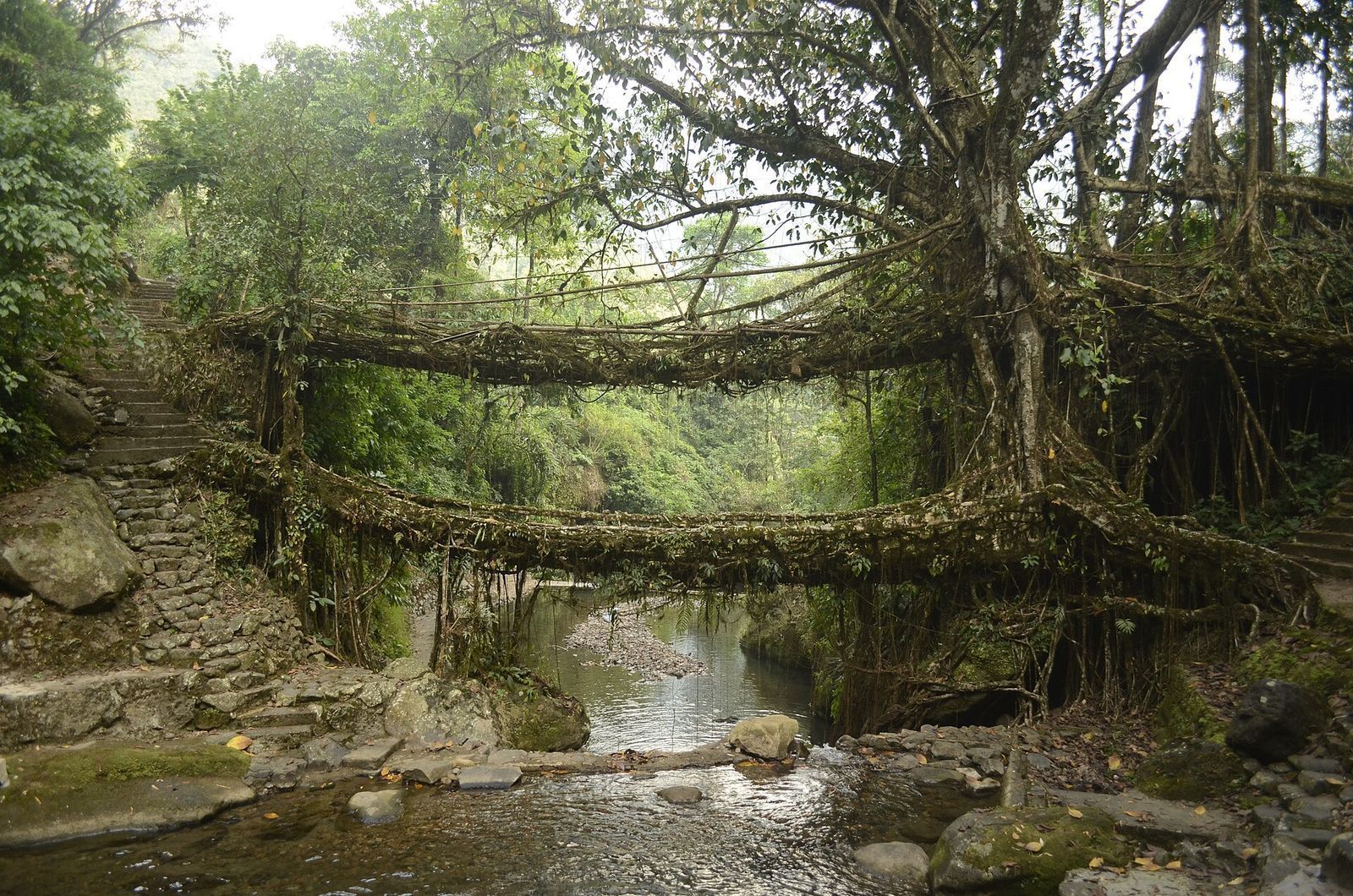
Deep in Meghalaya's rain-soaked gorges, the Khasi and Jaintia people have for centuries trained the aerial roots of the rubber fig tree across streams to form living, growing bridges — a feat of patient bio-engineering unlike anything else on earth. A root bridge takes decades to mature and then strengthens with age, some now well over a century old and able to carry dozens of people.
The most famous is the double-decker Umshiang bridge at Nongriat, reached by a steep descent of around 3,000 steps from Tyrna near Cherrapunji. The effort is real, and most people break the trek with a night at a Nongriat homestay, swimming in the jade rock pools and visiting the quieter single-decker bridges and the Rainbow Falls nearby. The root bridges are on India's UNESCO tentative list.
What to see & do
- The double-decker Umshiang root bridge at Nongriat
- The natural jade-green swimming pools along the trail
- Rainbow Falls, a further hour beyond Nongriat
- Single-decker bridges at Mawlynnong, Riwai and across the Jaintia Hills
Getting to Living Root Bridges
| How to reach | From Tyrna village near Cherrapunji (Sohra), about 2.5–3 hours from Shillong, then a steep stepped trek down. |
| Best time | October to April for the trek; the monsoon makes the steps slippery but the falls thunderous. |
| Permit | No permit for Meghalaya. |
| Good to know | Do it over two days with a Nongriat homestay rather than rushing down and back — the descent is hard on the knees, and dawn at the bridge is magical. |
More to explore
Dawki & the Umngot River
West Jaintia Hills, Bangladesh border
Boats that seem to float on air over glass-clear water.
Sohra (Cherrapunji)
East Khasi Hills
Waterfalls, caves and some of the heaviest rain on earth.
Mawlynnong
East Khasi Hills
Asia's cleanest village, and a window into Khasi life.