Khonoma
India's first green village, with a fierce and proud history
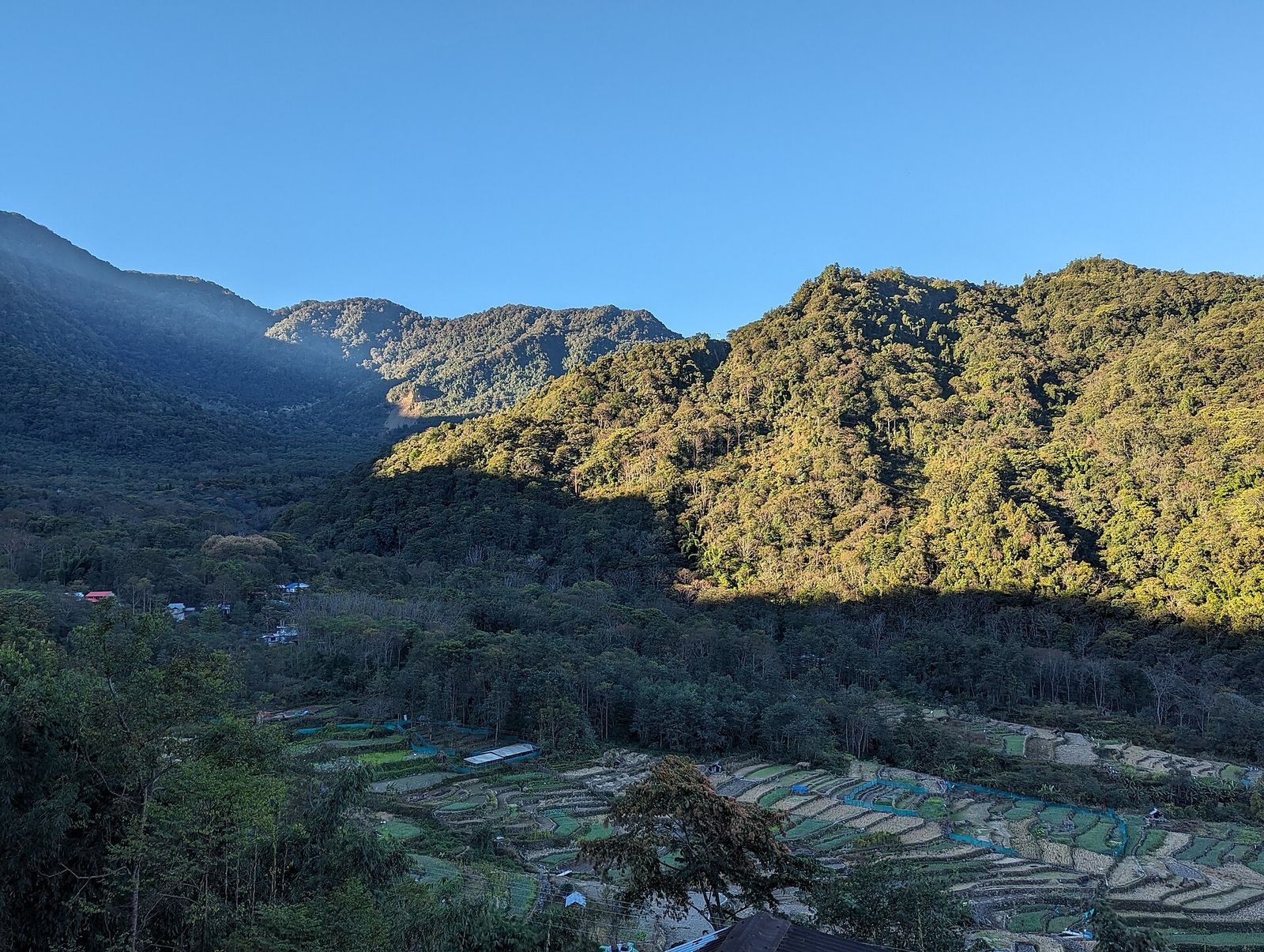
About 20 km from Kohima, Khonoma is a beautiful terraced Angami village with a formidable past: it was the centre of Naga resistance to British expansion in the 19th century, and its stone-gated fort withstood repeated assaults. Today it is celebrated as India's first 'green village', where the community banned hunting and logging across a large conservation area to protect the endangered Blyth's tragopan and the forest around them.
Terraced rice fields, said to grow dozens of local varieties, step down the hillsides; stone paths wind between traditional Angami houses hung with the trophies of a warrior culture; and community-run homestays make it one of the best places in the Northeast to experience Naga village life at first hand. It pairs naturally with Kohima and the Dzukou trek.
What to see & do
- The historic stone fort and village gates
- The famous terraced rice fields with their many varieties
- The Khonoma Nature Conservation area and its birdlife
- Angami homestays and living warrior-culture traditions
Getting to Khonoma
| How to reach | About 45 minutes to an hour from Kohima by road. |
| Best time | October to March; December ties in with the Hornbill Festival. |
| Permit | An Inner Line Permit is required for Nagaland. |
| Good to know | Stay a night in a community homestay rather than day-tripping, and take a village walk with a local guide. |
More to explore
Mawlynnong
East Khasi Hills
Asia's cleanest village, and a window into Khasi life.
Dzukou Valley
Nagaland–Manipur border, near Kohima
The valley of flowers of the Northeast.
Longwa, Mon
Mon district, Myanmar border
The Konyak village where the chief's house straddles two countries.