The connectivity revolution
Airports, tunnels, bridges and rail that are ending the region's isolation
Home → Industry & investment → The connectivity revolution
The physical isolation that held the North-East back is being dismantled at speed. Guwahati's new Adani-run Terminal 2, opened in December 2025, lifts the airport's capacity above 13 million passengers and adds international reach to the Gulf, Bangkok, Singapore and Paro — turning the city into a true regional gateway. Smaller airports at Itanagar (Donyi Polo), Pakyong, Rupsi, Tezu and Pasighat have brought air travel to places that had none.
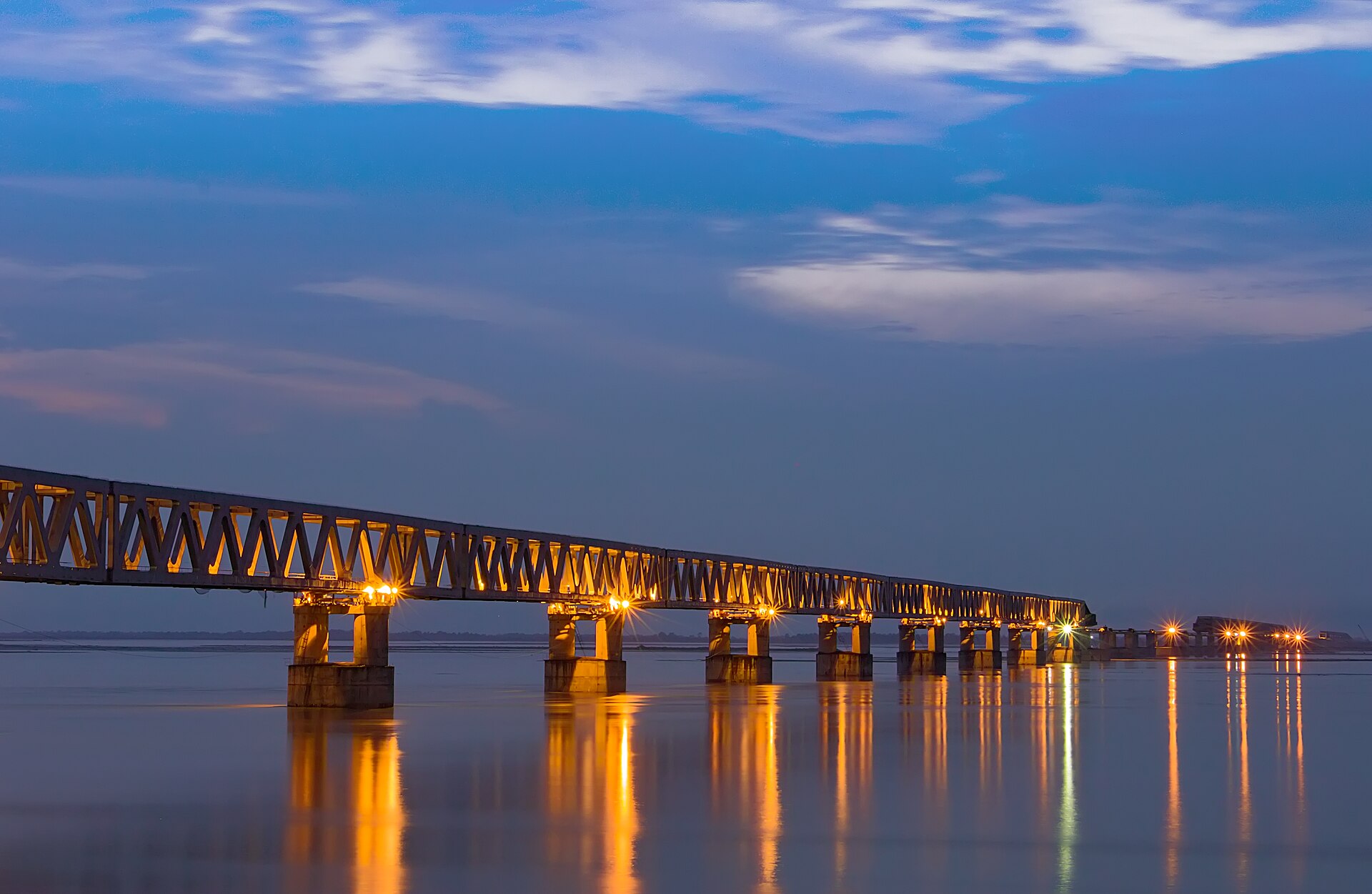
On the roads, the Sela Tunnel — the world's longest bi-lane high-altitude tunnel, opened in 2024 — keeps the strategic route to Tawang open through winter, while the Bogibeel bridge, India's longest combined rail-road bridge, links Upper Assam to Arunachal across the Brahmaputra. The Dhola–Sadiya (Bhupen Hazarika) bridge, India's longest river bridge, does the same further east.
Rail is finally reaching the hill capitals. Aizawl (via Sairang) joined the national network in 2025; a Vande Bharat and a Vande Bharat Sleeper now serve Guwahati; and lines to Imphal, Kohima and Gangtok are under construction. Together with the UDAN regional-flights scheme and new helicopter services, this connectivity revolution is the precondition for everything else — the tourism, the investment and the Act East trade all depend on it.
Key facts
Related stories
Act East Policy
How the Northeast became India's bridge to South-East Asia.
Tata Semiconductor Plant, Jagiroad
India's first indigenous chip assembly-and-test plant, rising near Guwahati.
Numaligarh Refinery Expansion
Tripling Assam's green refinery, with a pipeline from the sea and a bamboo bio-refinery.
Figures are drawn from public announcements (2024-2026) and may change; reconfirm before a business decision.