Rabdentse Ruins
The atmospheric ruins of Sikkim's second capital, under Kanchenjunga
Hidden at the end of a forest path near Pelling, the ruins of Rabdentse mark the second capital of the kingdom of Sikkim, which served as the seat of the Chogyals from 1670 until 1814, when repeated Nepali invasions forced the capital to move to Tumlong. Today it is a quiet, evocative archaeological site rather than a grand monument — and that is its charm.
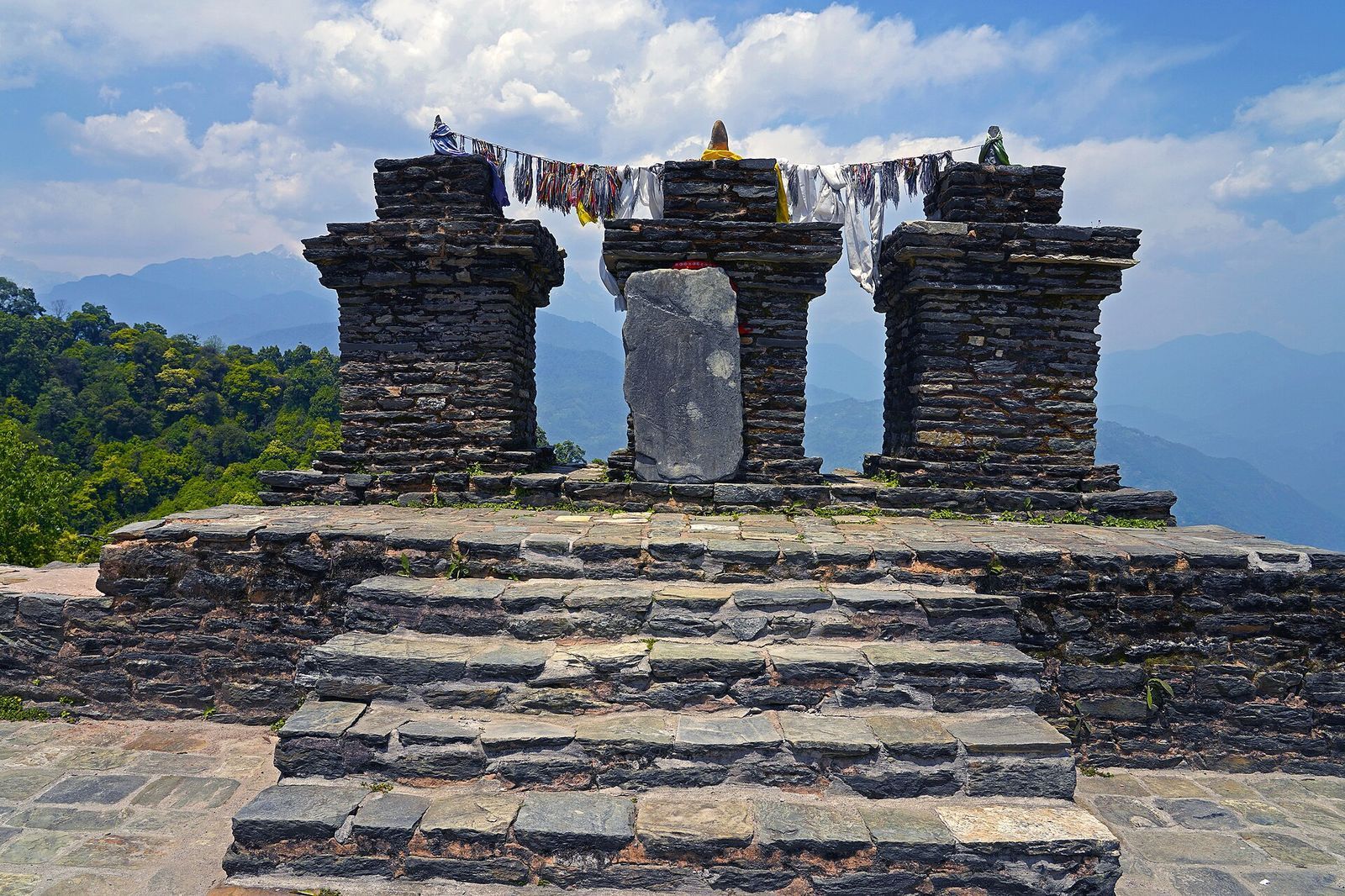
A short walk through dense woodland, alive with birdsong, opens suddenly onto a ridge-top clearing scattered with the stone foundations of the royal palace, the assembly courtyards and the chortens where the kings once worshipped. From the edge of the ruins, on a clear day, the whole snow massif of Kanchenjunga rises across the valley — the same view the Chogyals would have had from their throne.
Rabdentse pairs perfectly with the Pemayangtse monastery just up the hill, and with the Pelling skywalk and Sanga Choling nearby, making West Sikkim a rich day of history and mountains.
What to see & do
- The stone ruins of the royal palace and assembly courts on the ridge
- The three chortens where the Chogyals worshipped
- Kanchenjunga views across the valley on a clear morning
- Pemayangtse monastery, a short walk uphill
Getting to Rabdentse Ruins
| How to reach | Near Pelling in West Sikkim; a 15-minute forest walk from the road. No permit needed for Indians to enter Sikkim. |
| Best time | March to May and October to December for the mountain views. |
| Timings | Daylight hours; go in the morning before cloud builds. |
| Entry | A nominal fee. |
| Good to know | Wear proper shoes for the forest path and combine with Pemayangtse and the Pelling skywalk. |
More to explore
Rumtek Monastery
near Gangtok
The grand seat-in-exile of the Karmapa and the Kagyu lineage.
Pemayangtse Monastery
Pelling, West Sikkim
The premier Nyingma monastery, with a wooden model of the Buddhist heavens.
Sivasagar: Rang Ghar & Talatal Ghar
Sivasagar
The capital of the 600-year Ahom kingdom that stopped the Mughals.