Malinithan
Exquisite temple ruins at the foot of the eastern Himalaya
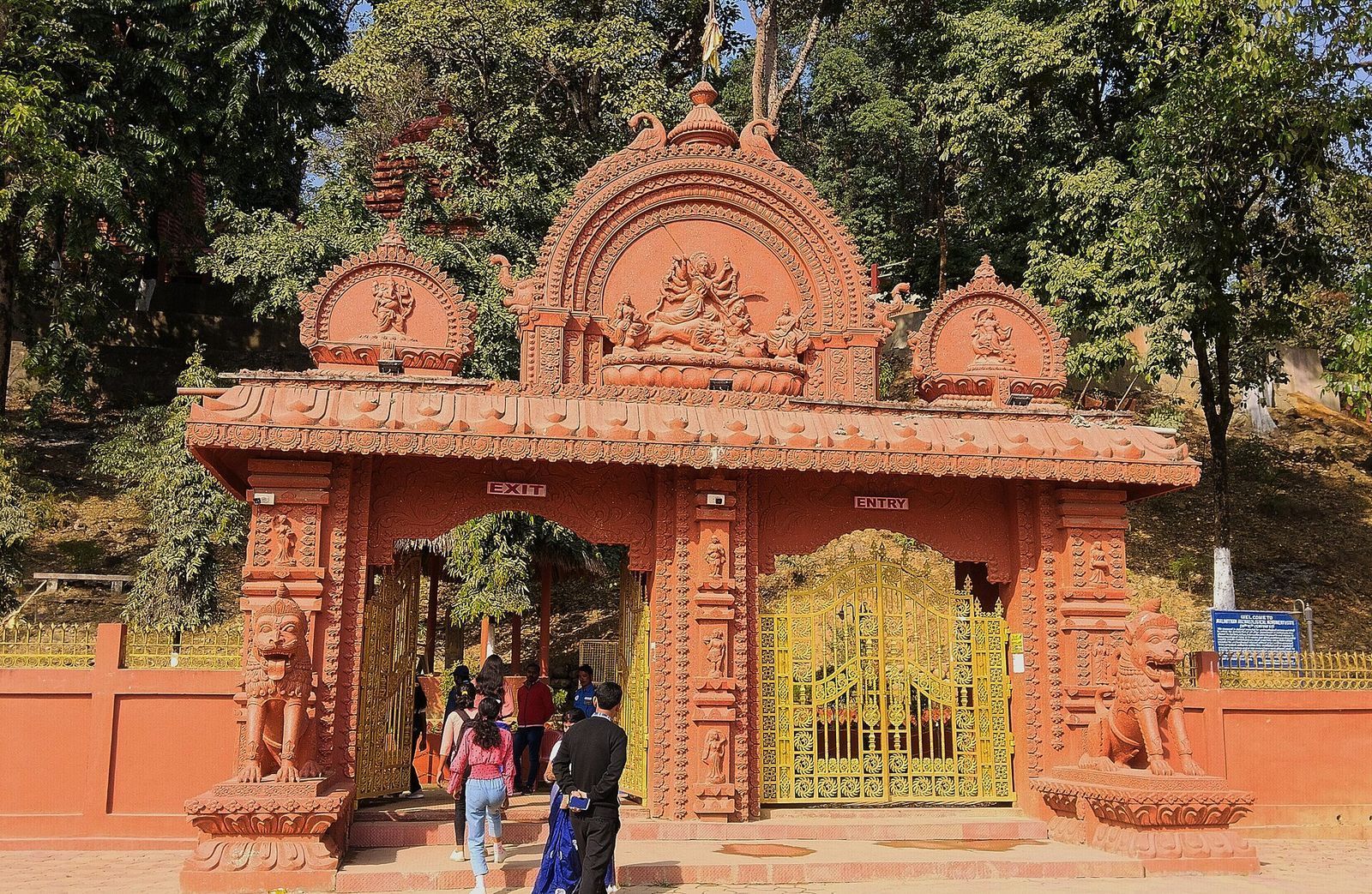
At Likabali, where the Siang hills meet the Assam plains, lie the ruins of Malinithan, a temple site dated to roughly the 13th–14th century and associated with the Chutia kingdom. Though only the granite base and a wealth of scattered sculpture survive, the quality of the carving is exceptional — among the finest early stone art in the Northeast.
The site takes its name from a legend linking it to Krishna and Rukmini and the goddess Durga as Malini, 'the keeper of the garden'. Among the ruins are beautifully sculpted images of Indra on his elephant Airavata, Surya, Kartikeya on his peacock, Ganesha, and finely worked panels of dancers and floral motifs, many now gathered in a small on-site display.
Malinithan rewards those drawn to art and archaeology, set against the backdrop of the forested foothills. It is usually visited from the Assam side, near North Lakhimpur, and requires an Arunachal permit.
What to see & do
- The carved images of Indra on Airavata, Surya and Kartikeya
- The granite temple base and scattered sculptural panels
- The on-site collection of recovered sculptures
- The foothill setting where the Himalaya meets the plains
Getting to Malinithan
| How to reach | At Likabali in Lower Siang, reached from North Lakhimpur (Assam); Lilabari is the nearest airport. An Inner Line Permit is required for Arunachal. |
| Best time | October to April. |
| Timings | Daylight hours. |
| Entry | Nominal. |
| Good to know | Best for travellers with a serious interest in sculpture and history; combine with a Brahmaputra-side route through upper Assam. |
More to explore
Tawang Monastery
Tawang
India's largest monastery, and the birthplace of the 6th Dalai Lama.
Parasuram Kund
Lohit district
A Himalayan river pilgrimage where devotees wash away sin.
Sivasagar: Rang Ghar & Talatal Ghar
Sivasagar
The capital of the 600-year Ahom kingdom that stopped the Mughals.